PREFACE
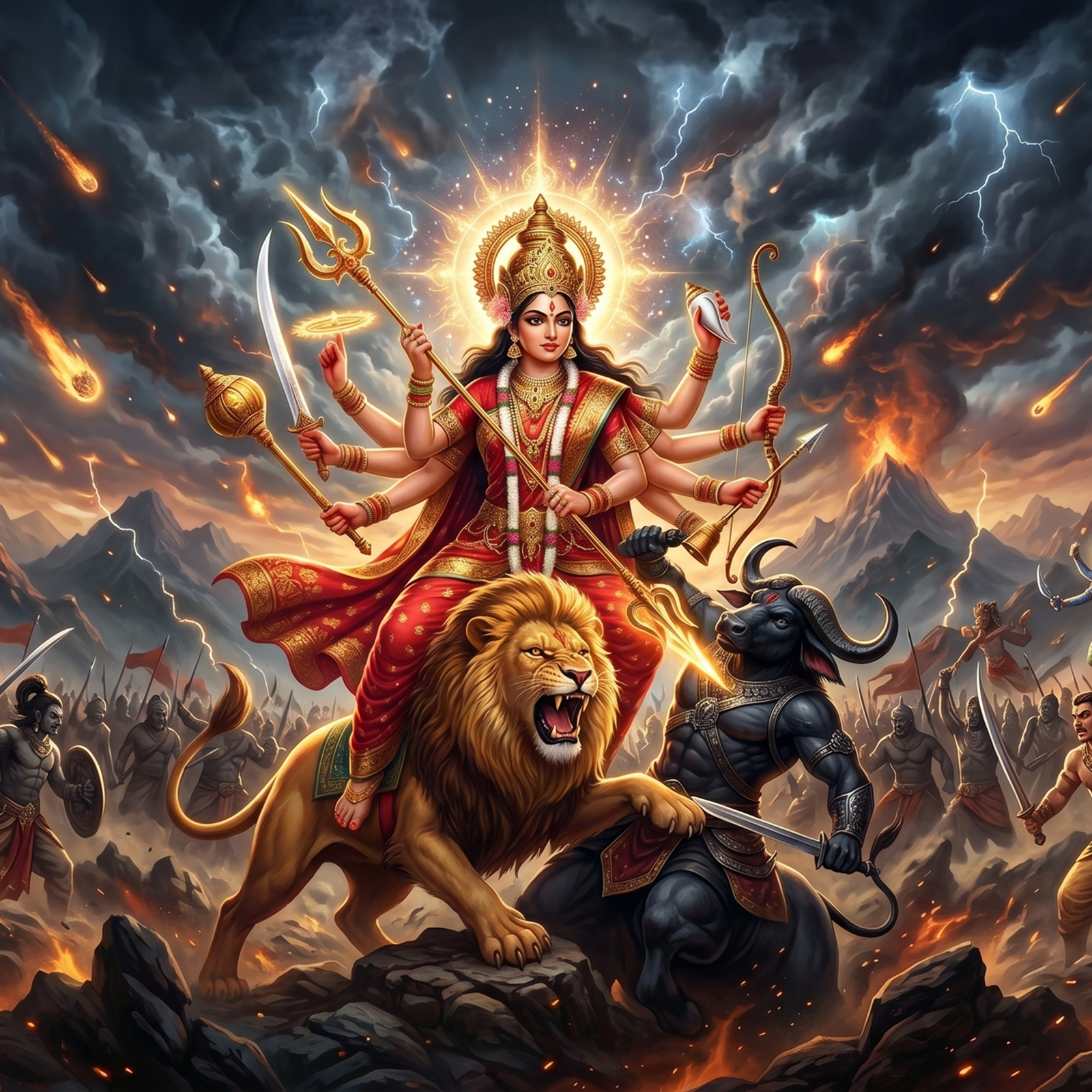
The story of Krishna Janmashtami is more than just a tale from the past; it is a celebration of hope that has lived in the hearts of millions for thousands of years. In the middle of a dark, stormy night, in a small prison cell in the city of Mathura, a light was born that would change the world forever.
This book was created to tell that story in a way that everyone can understand. Whether you are a child hearing about the “Blue Lord” for the first time or an adult looking to reconnect with the traditions of your heritage, these pages are for you. We explore the bravery of his parents, the miracle of his escape, and the beautiful ways people around the world celebrate his birthday today.
Our goal at MiMi Flix is to bring these ancient lessons of love, kindness, and bravery to life. As you read about the birth of Lord Krishna, may you feel the same joy that the people of Gokul felt when they first saw his smiling face.
COPYRIGHT
© 2026 MiMi Flix
All Rights Reserved. No part of this book may be reproduced, stored in a retrieval system, or transmitted in any form or by any means, electronic, mechanical, photocopying, recording, or otherwise, without the prior written permission of MiMi Flix.
This book is a work of historical and spiritual storytelling. The information provided is for educational and inspirational purposes. Every effort has been made to ensure the accuracy of the traditions and stories shared within these pages.
“The story of Krishna is the story of divine love and the triumph of truth.”
Created by MiMi Flix
DEDICATION
This book is dedicated to the seekers of light and the lovers of truth.
To the children, may you find courage in the stories of “Little Krishna” and carry his joy in your hearts. To the elders, may these pages remind you of the eternal peace that comes when we choose goodness over greed.
May the lessons of this midnight miracle inspire every reader to believe that, even in the darkest of times, hope is always being born.
CHAPTER 1: THE MIDNIGHT MIRACLE
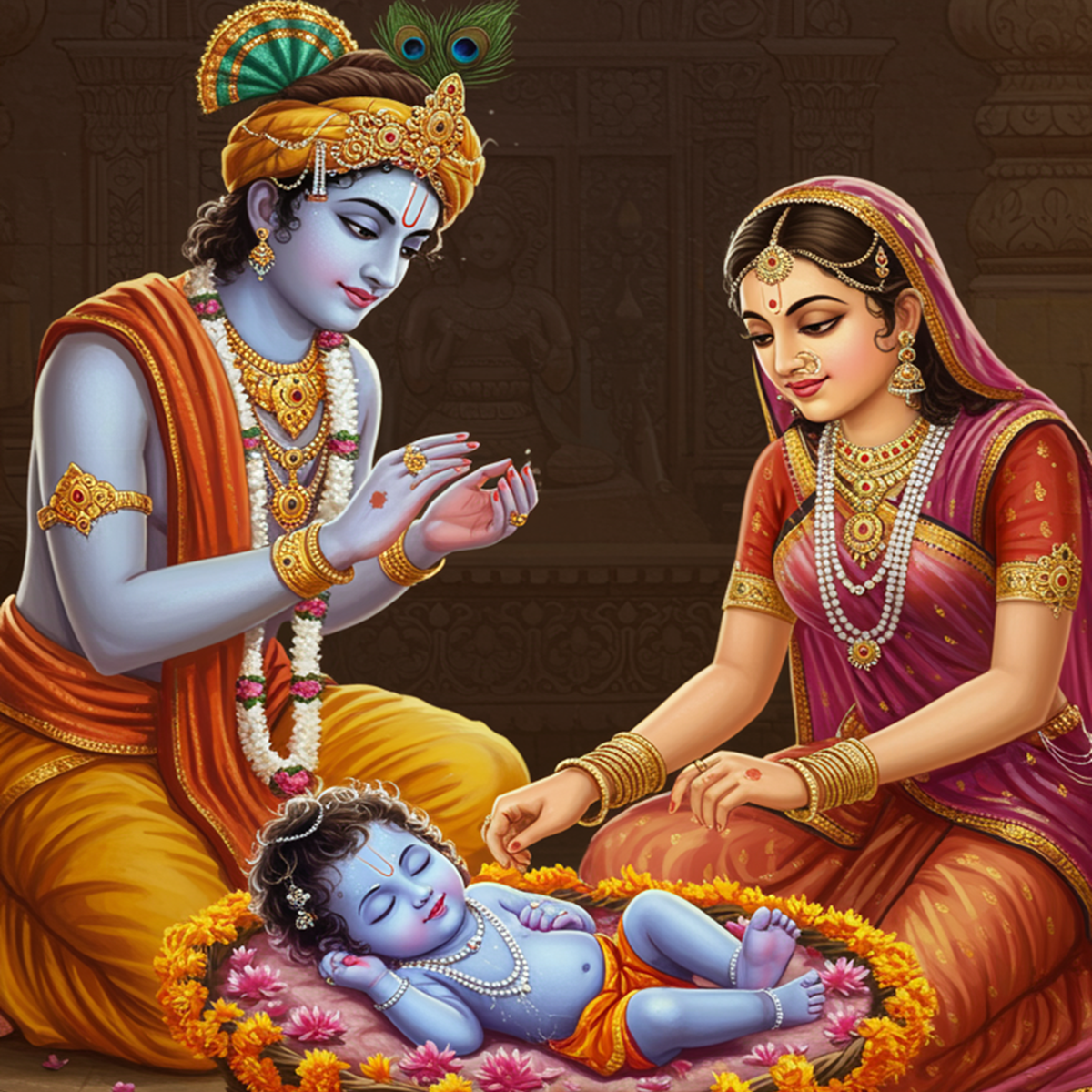
The story of Janmashtami is not merely a tale from the dusty pages of history; it is a living, breathing celebration of hope that has echoed through the corridors of time for thousands of years. It is known as the “Midnight Miracle,” a moment when the fabric of the universe seemed to pause, and the stars themselves leaned down to witness the impossible.
Imagine, if you will, a world blanketed in deep, suffocating darkness. In the ancient city of Mathura, the air was often heavy with the scent of rain and the unspoken fears of its people. The city, once famous for its golden spires and joyous festivals, had fallen under the shadow of a ruler whose heart was as cold as the stone walls of his dungeons. This was a time when goodness seemed to be a flickering candle in a vast, howling wind.
But every year, as the monsoon clouds gather and the scent of wet earth fills the air, millions of people around the world prepare to remember. They remember a night of thunder and lightning. They remember a prison cell that became a palace of light. They remember how a tiny, helpless infant changed the destiny of an entire nation.
The birth of Lord Krishna is a reminder that no matter how long the night lasts, the dawn is inevitable. It is a story that teaches us about the strength of a mother’s love, the unwavering courage of a father, and the divine play of a child who would grow up to be a king, a teacher, and a protector.
In this book, we will journey back through the rain-soaked streets of Mathura. We will feel the spray of the mighty Yamuna River and hear the laughter of the children in the village of Gokul. We will explore the ancient prophecies that made kings tremble and the simple traditions that still bring families together today.
So, let us begin our journey. Let us step into the storm and find the light that was born in the heart of the night. This is the story of Janmashtami—the celebration of the one who was born to bring light to a dark world.
CHAPTER 2: THE SHADOW OF THE CROWN
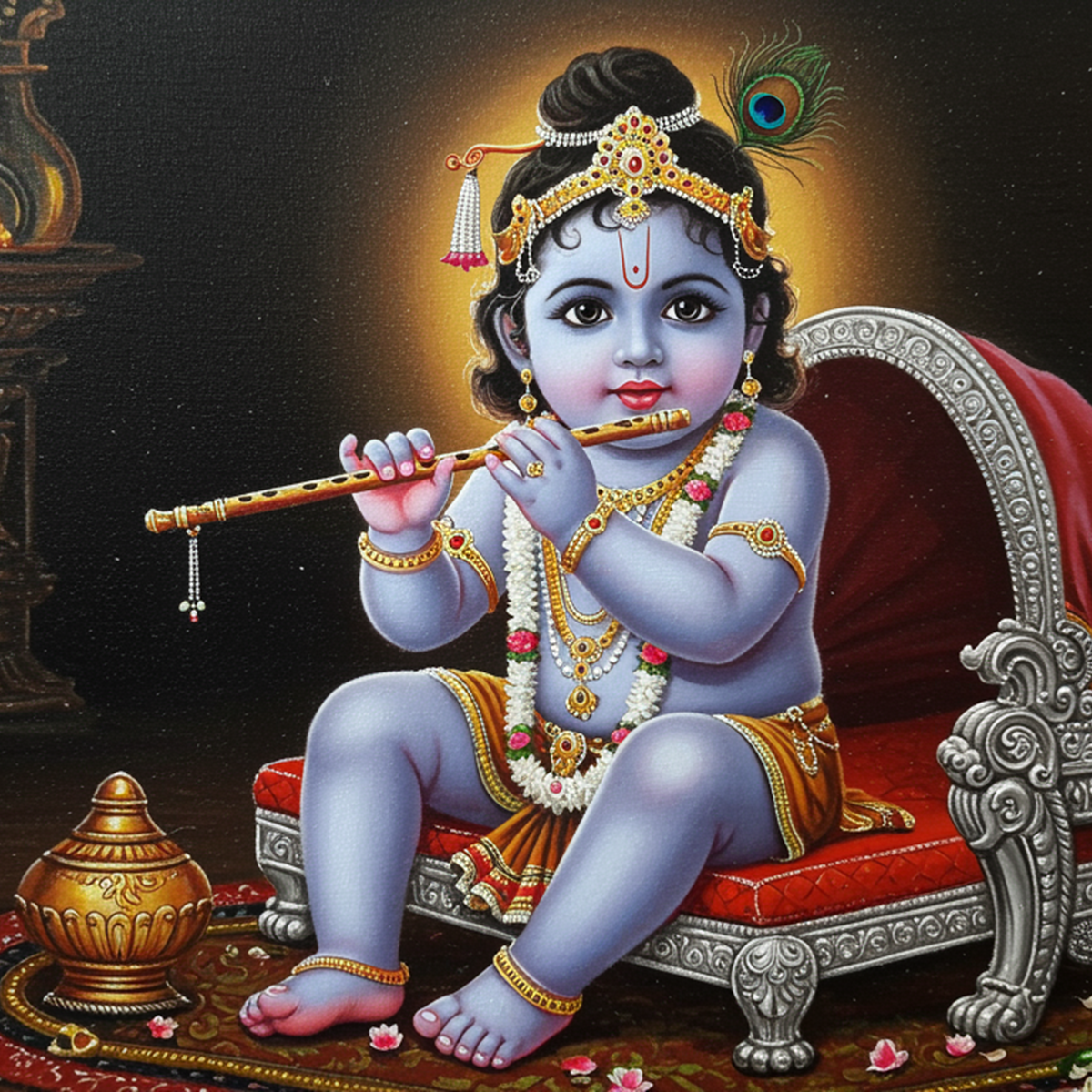
To understand the miracle of Krishna’s birth, one must first understand the darkness that preceded it. The city of Mathura was once the jewel of the Vrishni kingdom, a place where the bells of temples rang in harmony with the laughter of children. But a shadow was growing within the royal halls, and that shadow had a name: Kansa.
Kansa was the son of King Ugrasena, a ruler known for his wisdom and his devotion to the welfare of his people. However, as Kansa grew, it became clear that he did not share his father’s gentle heart. While Ugrasena spent his days listening to the grievances of the poor, Kansa spent his time in the company of ambitious warriors and dark sorcerers. He did not see kingship as a duty to protect; he saw it as a prize to be seized.
The young prince was physically imposing, with a voice like rolling thunder and eyes that seemed to burn with an unquenchable fire. But inside, he was hollowed out by greed. He began to believe that the laws of Dharma—the laws of righteousness—were chains meant for the weak. He preferred the philosophy of fear. He watched his father’s court and grew impatient, viewing the king’s kindness as a sign of old age and decay.
Kansa began to build a secret army. He reached out to the neighboring kingdoms of dark kings and powerful demons, forming alliances that would make the hair on a common man’s neck stand on end. He learned the arts of war and the even darker arts of manipulation. Slowly, he replaced the palace guards with men who were loyal only to him—men who cared nothing for tradition and everything for gold.
The day Kansa took the throne is still remembered as the day the sun seemed to lose its warmth in Mathura. He did not wait for a ceremony or a blessing. He marched into the grand assembly hall, his heavy boots echoing like drumbeats against the polished marble floor. With his sword drawn and his loyal soldiers at his back, he confronted his own father.
In a display of cold-hearted cruelty that shocked the elders, Kansa stripped the crown from King Ugrasena’s head. He did not stop there. To ensure there would be no rebellion, he threw his father into the deepest, dampest dungeon of the city—the very prison that would later play a central role in the story of Krishna.
From that moment on, Kansa declared himself the undisputed King of Mathura. He dismantled the old laws and replaced them with his own iron-clad decrees. The temples grew quiet as the priests feared to speak of virtue. The marketplace grew somber as heavy taxes drained the pockets of the workers. Kansa surrounded himself with massive walls and even more massive guards, thinking that stone and steel could protect him from his own destiny.
He sat upon his stolen throne, looking out over a city that feared him, believing he had won. He did not realize that by creating such a deep darkness, he was setting the stage for a light that no wall could keep out. The shadow of his crown was vast, but it was also the very thing that made the people of Mathura look toward the horizon, praying for a savior to finally arrive.
CHAPTER 3: A KINGDOM IN FEAR
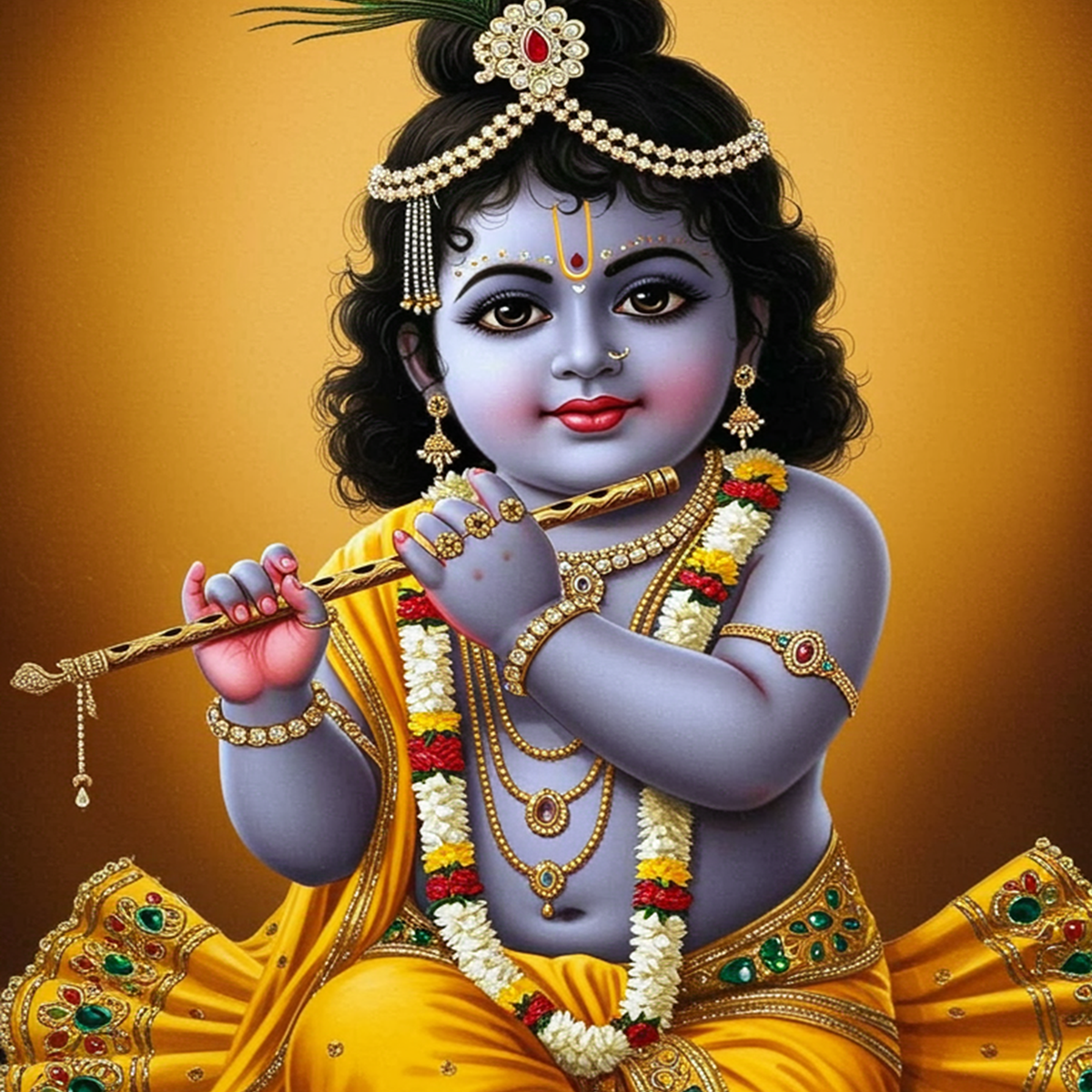
For a brief moment in the history of Mathura, it seemed as though the dark clouds of Kansa’s reign might be parted by a ray of sunshine. The occasion was the wedding of Kansa’s beloved sister, Princess Devaki, to the noble and virtuous Vasudeva. Despite his cruelty, Kansa held a genuine affection for his sister, and he spared no expense to make the celebration the grandest the city had ever seen.
The city was transformed for the festivities. Bright silk banners in shades of saffron, crimson, and gold fluttered from the balconies of every house. The scent of roasting spices, sweet jasmine garlands, and expensive incense filled the air, masking the usual gloom of the capital. Musicians lined the streets, playing flutes and drums, while dancers moved in rhythmic patterns to celebrate the union of two powerful families.
Devaki looked radiant in her bridal finery, her jewelry glimmering like stars against her silk sari. Beside her sat Vasudeva, a man known throughout the land for his honesty and calm spirit. Even Kansa seemed transformed by the spirit of the day. He smiled and laughed, personally greeting the guests and ensuring that the feast was plentiful. It was a rare day of peace, and the citizens of Mathura dared to hope that this marriage might soften the heart of their harsh King.
As the wedding ceremony concluded, it was time for the traditional farewell. To show his deep love for his sister, Kansa insisted on acting as the charioteer himself. He took the golden reins of the royal chariot, ready to drive the newlyweds to their new home. The crowds lined the streets, cheering and throwing flower petals as the magnificent horses began to move.
But as the chariot reached the edge of the city, the sky suddenly changed. The bright blue afternoon was swallowed by an eerie, swirling darkness. The wind picked up, howling through the trees, and the horses reared back in terror, their eyes wide and wild. A silence fell over the crowd—a heavy, unnatural silence that felt like the world was holding its breath.
Then, a voice like the crashing of a thousand oceans echoed from the heavens. It was not a human voice; it was a divine vibration that shook the very foundations of the earth.
“O Kansa! You fool!” the voice thundered. “You drive this chariot with such joy, unaware of the fate that awaits you. The eighth child born to this sister of yours shall be the cause of your death. He will be the end of your tyranny and the destroyer of your evil!”
The transformation in Kansa was instantaneous and terrifying. The smile vanished from his face, replaced by a mask of pure, murderous rage. His love for his sister evaporated in the heat of his fear. To Kansa, power was everything, and he would not allow anyone—not even his own flesh and blood—to threaten his crown.
He dropped the reins and drew his sharp, curved sword in one fluid motion. He grabbed Devaki by her hair, pulling her from the seat of the chariot. The crowd screamed in horror as the festive atmosphere turned into a nightmare. Kansa raised his blade, ready to kill his sister right there on the dusty road to prevent the prophecy from ever coming true.
Vasudeva, ever the man of peace and wisdom, threw himself between the King and his bride. He pleaded with Kansa, speaking of the sin of killing a woman and a sister on her wedding day. He promised Kansa that they would not flee, and that they would hand over every child born to them so that the King would have nothing to fear.
Kansa lowered his sword, but his eyes remained cold and pitiless. He did not trust them, and he would not take any chances. He ordered his soldiers to seize the couple immediately. The wedding music was replaced by the clanking of heavy iron chains. Instead of a new home filled with flowers, Devaki and Vasudeva were marched toward the dark, stone towers of the royal prison. The kingdom of Mathura watched in silence as the last spark of joy was extinguished, replaced by a fear deeper than any they had known before.
CHAPTER 4: THE PROPHECY’S ECHO
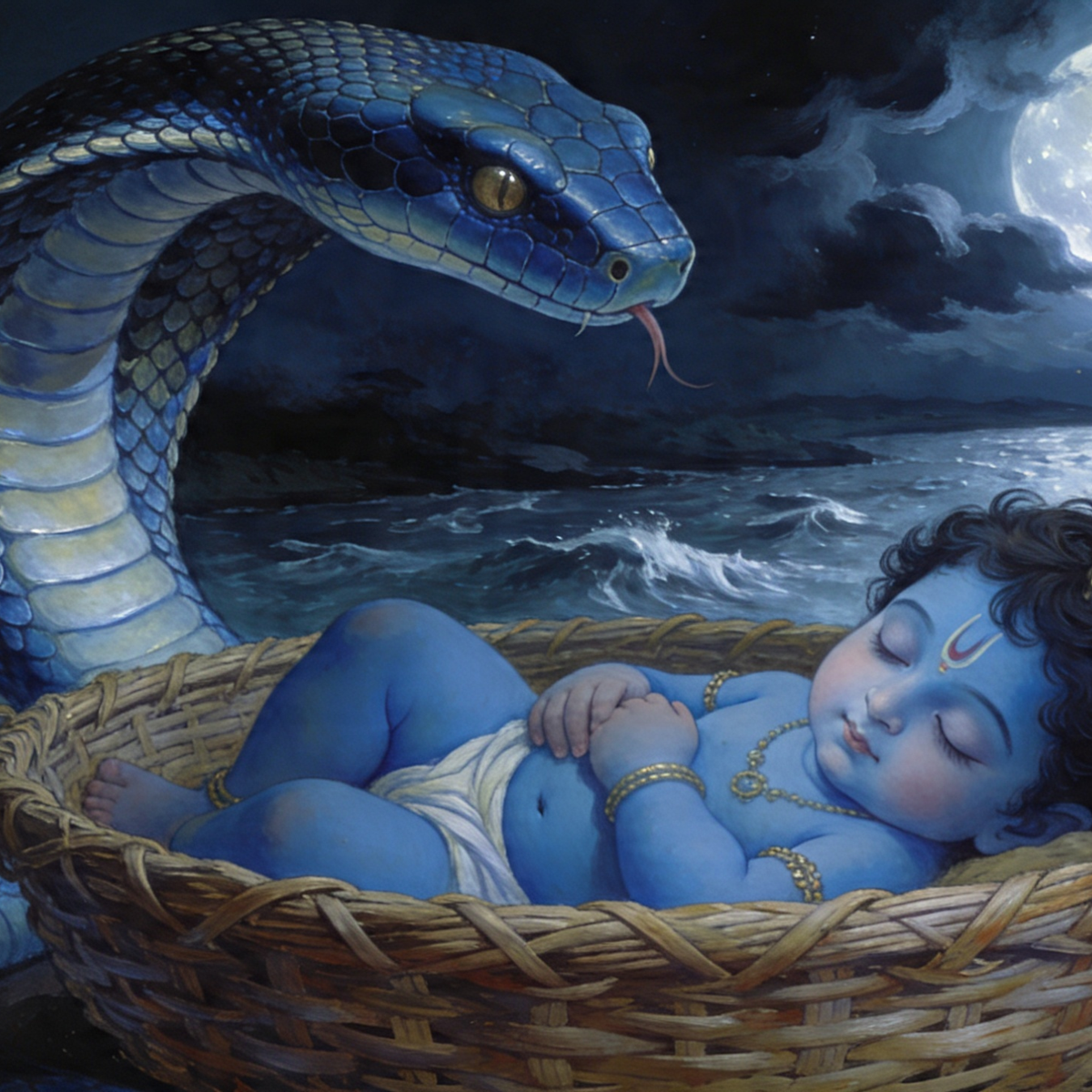
While the heavy iron doors of the prison slammed shut on Devaki and Vasudeva, the news of the divine prophecy did not stay trapped behind stone walls. Like a wildfire catching in dry grass, the story of the voice from the sky swept through the streets of Mathura. It traveled from the high balconies of the nobles down to the narrow, crowded alleys where the common people lived, and finally, it settled in the heart of the city: the Great Marketplace.
The marketplace was usually a place of loud haggling and vibrant color, but in the days following the royal wedding, a strange, heavy atmosphere took hold. The merchants still laid out their sacks of cumin, turmeric, and dried chilies. The weavers still hung their bright silks from wooden rafters. But the usual shouting and laughter had been replaced by something much quieter. The city was whispering.
If you were to walk through the market during those days, you would see groups of men huddled together near the grain stalls, their heads bowed low. You would see women at the communal wells, lingering longer than necessary, their voices barely audible above the splashing of water. They were all talking about the same thing: the eighth son.
To the common people, the prophecy was more than just a threat to King Kansa; it was a glimmer of light in a very long night. For years, they had lived under the shadow of Kansa’s greed. They had seen their sons drafted into his cruel armies and their hard-earned coins taken to build his massive fortifications. They were a people whose spirit had been bent, but not yet broken.
In the shadows of the stalls, old men with silver beards spoke of the ancient legends. They reminded the younger generation that no tyrant could rule forever and that the universe always found a way to balance itself. “The heavens have spoken,” they would murmur, their eyes gleaming with a hidden fire. “The king may have the swords, but the child will have the stars.”
However, this hope was mixed with a deep, chilling fear. Kansa’s spies, known as his “eyes and ears,” were everywhere. They moved through the crowds in plain clothes, listening for any sign of rebellion or any mention of the prophecy. Because of this, the people of Mathura learned to speak in codes. They didn’t use the name of the Divine; they spoke of the “coming rain” or the “shifting wind.”
Every time a guard’s heavy boots rang out on the cobblestones, the market would go silent. The merchants would suddenly become very busy with their scales, and the shoppers would look down at the ground. The tension was like a stretched bowstring, ready to snap at any moment.
Parents looked at their own children with a new kind of intensity. They thought of Devaki, locked away in the darkness, and their hearts ached for the princess who was once the pride of the city. The prophecy had turned the entire city into a community of watchers. They watched the moon wax and wane, counting the months. They watched the palace towers, wondering what was happening in the silence of the dungeons.
The echo of the prophecy changed the very soul of Mathura. It was no longer just a city of stone and commerce; it had become a city of expectation. Every sunset was a day closer to the promised birth, and every sunrise was a prayer for the safety of the unborn. The people knew that a storm was coming—a storm that would either wash away the cruelty of Kansa or drown them all in his rage. But for the first time in many years, the people of Mathura were not just afraid; they were waiting.
CHAPTER 5: THE IRON GATE
The royal prison of Mathura was a place designed to break the spirit of any man. Built deep beneath the foundations of the city, its walls were made of thick, jagged stone that seemed to seep with the cold of the earth itself. There were no windows to let in the golden light of the sun, only narrow slits near the ceiling where the air felt thin and tasted of dust. This was the place Kansa chose for his sister and her husband, turning their wedding joy into a lifetime of shadows.
The iron gate that led to their cell was a monster of metal. It was heavy, rusted, and groaned on its hinges like a dying beast every time it was opened. To ensure that there was no hope of escape, Kansa had ordered seven separate doors to be built between the inner cell and the outside world. Each door was guarded by soldiers whose hearts had been hardened by years of serving the tyrant. They were men of iron, forbidden from speaking to the prisoners and commanded to watch their every move with unblinking eyes.
Inside the cell, Devaki and Vasudeva found themselves in a world where time had lost its meaning. The only way they could tell day from night was by the slight change in the temperature of the stone walls or the dim flickering of the oil lamps held by the guards in the corridor. The floor was cold and unforgiving, and the silence was so deep that they could hear the steady drip of water from the damp ceiling—a rhythmic tapping that served as the only clock they possessed.
Yet, even in this grim darkness, the bond between the husband and wife did not break. Vasudeva, ever the pillar of strength, spent his hours in deep meditation. He sat with his back against the rough wall, his eyes closed, finding a peace that the prison bars could not reach. He spoke to Devaki in soft, steady tones, reminding her that their suffering was part of a larger, divine plan. He encouraged her to keep her heart pure and her mind focused on the promise of the prophecy.
Devaki, though her heart was heavy with grief, showed a bravery that even the guards secretly admired. She transformed their small, dark cell into a sanctuary of prayer. Instead of silk and gold, she was surrounded by shadows, yet she carried herself with the dignity of a queen. She would sit for hours, her hands folded, silently chanting and waiting for the destiny that had been foretold.
The iron gate was not just a physical barrier; it was a symbol of Kansa’s fear. Every time the heavy bolts slid into place with a resounding “clank,” it was a reminder that the King was terrified of a child who had not yet been born. The guards would walk the perimeter, their torches casting long, dancing shadows on the walls, but they could not dim the inner light that Devaki and Vasudeva shared.
As the weeks turned into months, and the months into years, the prison became their entire world. They watched the seasons change only through the shifting dampness of the air. They heard the distant muffled sounds of the city celebrations above them, knowing that while the world moved on, they remained frozen in time. But through the cold and the hunger, through the loneliness and the chains, they held onto one thing that Kansa could never take away: their faith. They knew that the iron gate, no matter how strong, was only temporary. They were waiting for the moment when the heavens would intervene and the heavy locks would finally yield to a power far greater than any king.
CHAPTER 6: THE SEVEN SORROWS
If the walls of the Mathura prison could speak, they would tell a story of unimaginable grief and legendary strength. As the years passed within the cold stone cell, Devaki and Vasudeva faced a trial that would have broken the strongest of spirits. This period of their lives is known as the time of the Seven Sorrows—a long, dark corridor of history where hope was tested time and time again.
The first sorrow arrived when Devaki gave birth to her first son. Even in the gloom of the dungeon, the arrival of a new life brought a brief, flickering moment of joy. The baby’s cry echoed against the damp walls, a sound of pure innocence in a place of deep shadow. Vasudeva, remembering his promise to Kansa, knew what he had to do. With a heart like lead, he carried the newborn infant to the King.
Kansa, seeing the honesty of Vasudeva, initially felt a rare moment of hesitation. He looked at the beautiful child and almost turned away. But his advisor and the dark influences that surrounded him whispered in his ear, reminding him of the prophecy. “A snake is a snake, even when it is small,” they warned. Kansa’s fear surged back, more powerful than his mercy. He seized the child and ended its life without a second thought.
This tragedy repeated itself five more times. Each time a child was born, Devaki’s heart would swell with a mother’s love, only to be shattered moments later by the heavy footsteps of the guards outside the iron gate. Six times, the heavy bolts slid back. Six times, the shadow of Kansa fell across the floor of the cell. And six times, the cradle was left empty.
The city of Mathura mourned in silence for each of these lost princes. The people counted the years not by the seasons, but by the sorrows of their princess. The marketplace would go quiet whenever the news of a birth reached the streets, for everyone knew what the outcome would be. Devaki grew thinner, her eyes reflecting a deep, oceanic sadness, yet she never allowed her faith to be extinguished. She and Vasudeva became like two candles burning in a storm—flickering, but refusing to go out.
The seventh sorrow was different. This was the pregnancy that would have been the seventh child. However, divine intervention was at work. Through a miracle of the heavens, the child was moved from Devaki’s womb to the womb of Rohini, another wife of Vasudeva who was living in safety in the village of Gokul. To Kansa and the rest of the world, it appeared as though Devaki had lost her seventh child naturally. Kansa felt a sense of relief, believing the divine plan was failing.
He did not realize that this child, who would be named Balarama, was being hidden away to become the elder brother and protector of the Savior yet to come. The “loss” of the seventh child was actually the first victory of light over darkness.
By the end of these years, the atmosphere in the prison had changed. The air felt electric, as if the very atoms were vibrating with anticipation. Devaki and Vasudeva, having endured the loss of six sons and the mysterious disappearance of the seventh, were now empty of everything but their devotion. They had been purified by the fire of their grief. They were now ready for the eighth child—the child of the prophecy, the child who would not be taken, and the child who would change the world forever.
The Seven Sorrows had passed, and the midnight of the miracle was finally drawing near.
CHAPTER 7: A RAY OF HOPE
As the time for the eighth child drew near, a strange and wonderful transformation began to take place within the walls of the Mathura prison. For years, the cell had been a place of shadows and cold stone, but now, the very air seemed to shimmer with an invisible energy. It was as if the universe was exhaling a long-held breath, preparing for a moment that had been written in the stars since the beginning of time.
Devaki noticed the change first. One evening, as she sat in her usual corner for prayer, she realized that the darkness no longer felt heavy or frightening. Instead, it felt warm and protective, like a soft velvet blanket. The damp walls of the dungeon, which had once seeped with the chill of the earth, now seemed to glow with a faint, pearlescent light. The rhythmic dripping of water no longer sounded like a ticking clock of doom, but like a gentle, rhythmic song.
This was not a light that came from a lamp or a torch. It was a “Ray of Hope”—a divine radiance that began to emanate from Devaki herself. As the days passed, her face took on a celestial glow that made even the hardened guards turn their eyes away in wonder. Her eyes, once clouded by the sorrows of the past, became clear and bright, reflecting a peace that surpassed all understanding.
The guards outside the iron gate whispered among themselves. They had seen many prisoners come and go, but they had never seen anything like this. They noticed that the flowers near the prison entrance, usually wilted and gray from the dust of the city, had suddenly begun to bloom in vibrant colors. The birds of Mathura, which usually avoided the prison towers, began to gather on the high ledges, their songs filling the air with melodies that sounded like a celestial choir.
Inside the cell, Vasudeva watched his wife with awe. He realized that the prophecy was not just a distant promise anymore; it was becoming a reality before his very eyes. The divine light that filled the room was so pure that it seemed to wash away the memories of the six sons they had lost. It was a light of healing, a light of protection, and a light of absolute certainty.
Even Kansa felt the shift in the atmosphere. From his high balcony in the palace, he looked toward the prison towers and felt a shiver of dread that no amount of fire could warm. He sensed that the walls he had built were not high enough and the chains he had forged were not strong enough. The more he tried to tighten his grip on his kingdom, the more he felt his power slipping away like sand through his fingers. He doubled the number of guards and ordered the torches to be kept burning all night, but he could not stop the divine light from rising.
For Devaki and Vasudeva, the fear of the King began to dissolve. The “Ray of Hope” reminded them that they were not alone in the darkness. The Divine was not just coming to save them; the Divine was already with them, filling their small cell with the majesty of the entire cosmos. They spent their hours in a state of joyful anticipation, knowing that the longest night of their lives was finally reaching its peak.
The prison, once a symbol of Kansa’s cruelty, had been transformed into a sacred temple. Every stone, every bar, and every shadow was now bathed in the glow of the coming miracle. The Ray of Hope had arrived, signaling to the world that the time of the tyrant was almost over, and the time of the Savior was about to begin.
CHAPTER 8: THE LONGING OF GOKUL
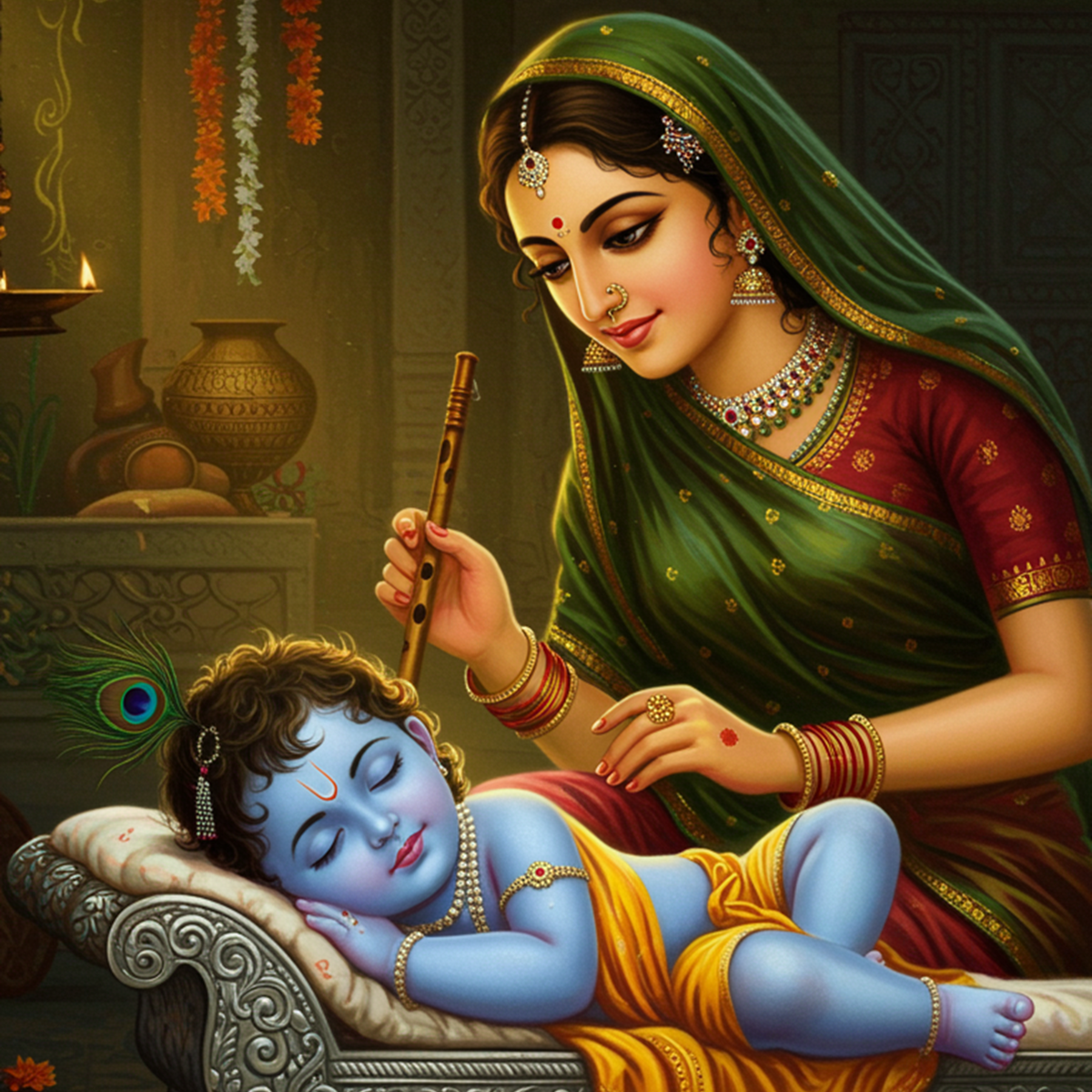
While the city of Mathura was a place of high stone walls, clanking chains, and heavy shadows, there was another world just across the banks of the mighty Yamuna River. This was the village of Gokul. If Mathura was a city of iron, Gokul was a land of gold. It was a place of rolling green pastures, ancient trees with wide, sheltering branches, and the constant, musical sound of cowbells ringing in the breeze.
The people of Gokul were simple, hard-working, and kind-hearted cowherds. Their lives were dictated by the rising and setting of the sun and the needs of their vast herds of cattle. At the heart of this community were Nanda, the village headman, and his wife, Yashoda. They were respected by everyone, not because of their wealth, but because of their immense generosity and the warmth of their spirits.
Nanda was a man of the earth—strong, patient, and wise. Yashoda was the soul of the village, a woman whose kitchen was always open and whose smile could brighten the dimmest day. Their home was a place of abundance. Their storerooms were filled with pots of fresh cream, golden butter, and sweet curd. Yet, despite all the beauty and prosperity that surrounded them, a quiet sadness lived in the corners of their hearts.
Nanda and Yashoda had everything a person could want, except for one thing: a child of their own.
For many years, they had watched the other families in Gokul. They saw the village children playing in the dust, heard their high-pitched laughter during the festivals, and watched mothers tucking their little ones into bed at night. Yashoda would often stand at her doorway, her eyes lingering on the empty wooden cradle she had kept in her room for years. She would imagine the sound of tiny footsteps on her polished floors and the feel of a small hand gripping her finger.
This longing was not a loud or bitter grief; it was a soft, steady ache. Yashoda spent many of her mornings by the riverbank, offering prayers to the heavens. She would light small oil lamps and set them afloat on the Yamuna, watching the tiny flames bobbing on the water until they disappeared into the distance. Nanda, too, shared this silent prayer. He worked even harder, building a legacy for a family he hoped to one day have, always keeping his faith that the universe would eventually hear their plea.
Their longing was an important part of the divine plan. While Devaki and Vasudeva were being tested by the fires of prison and loss, Nanda and Yashoda were being prepared in a different way. Their hearts were being stretched and softened, turned into vast reservoirs of love. The universe was waiting for a place where the Divine could be a child—a place where he would be loved not as a King or a Savior, but simply as a son.
Gokul was being groomed for this very purpose. The grass grew greener and more tender, the cows gave more milk than ever before, and the air seemed to hum with a secret joy. The village was like a nest being carefully lined with the softest feathers, ready for a precious arrival.
As the night of the miracle approached in Mathura, the longing in Gokul reached its peak. Yashoda felt a strange restlessness, a feeling that something wonderful was hovering just out of sight. She didn’t know about the prophecy, the prison, or the tyrant Kansa. She only knew that her heart was full to bursting, and she was ready to give all that love to a child. The longing of Gokul was the final piece of the puzzle, the invitation that the Divine had been waiting for.
CHAPTER 9: THE BIRTH OF THE LORD
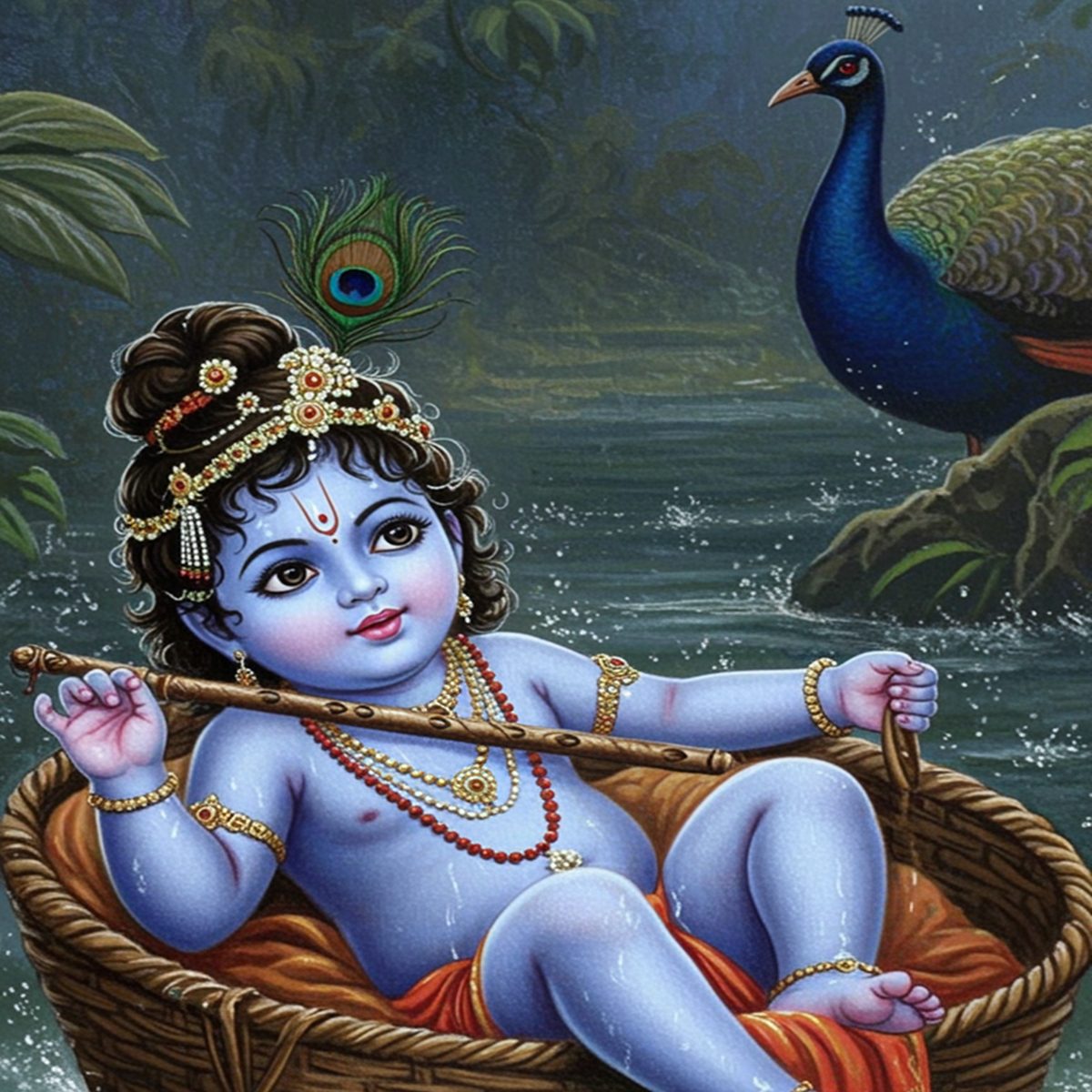
The night of the birth was unlike any other night in the history of the world. It was the eighth day of the dark fortnight in the month of Bhadrapada, a time when the moon was hidden and the world was swathed in a deep, velvety ink. But nature itself seemed to know that a monumental event was about to occur.
Outside the prison walls, the sky was a battlefield of elements. Massive, dark clouds rolled across the heavens like giant chariots, and the sound of thunder was not a frightening crash, but a deep, rhythmic drumbeat—as if the sky were playing music for a king. Lightning danced across the horizon, illuminating the city of Mathura in brief, silver flashes. The rain began to fall, but it was not a cold or harsh rain; it was a gentle, cooling mist that washed the dust from the trees and the stones of the city.
Inside the deepest cell of the prison, the atmosphere reached a fever pitch. The “Ray of Hope” that had been growing for days suddenly intensified until the dark stone walls were no longer visible. The room was filled with a brilliant, golden radiance that felt warm to the touch and smelled of fresh lotuses and sandalwood.
In that sacred, silent moment at the stroke of midnight, the Divine appeared.
He did not arrive as an ordinary infant. At first, He manifested in His full, majestic form to Devaki and Vasudeva. He stood before them with four arms, holding the traditional symbols of divinity: the conch shell, the discus, the mace, and the lotus flower. He wore a crown of pure gold that shimmered in the light of His own being, and His eyes held the wisdom of a thousand lifetimes and the kindness of a father.
Devaki and Vasudeva fell to their knees, their hearts overflowing with a joy so profound that they forgot they were in a prison at all. For a moment, the chains on their wrists felt like ribbons of silk, and the cold floor felt like a bed of flowers. They realized that their years of suffering, their losses, and their tears had all been leading to this single, perfect second.
The Divine spoke to them, not with words, but with a voice that resonated within their very souls. He thanked them for their endurance and their unwavering faith. He explained that He had come to lift the burden of the earth and to restore the light of Dharma.
Then, as if by magic, the majestic form began to fade. The four arms became two; the golden crown vanished, and the divine weapons disappeared. In their place sat a beautiful, tiny baby boy with skin the color of a dark rain cloud and eyes like the petals of a blooming lotus. He was the most beautiful child the world had ever seen, radiating a charm that could melt the hardest heart.
As the baby gave His first soft cry, the heavy, oppressive energy of the prison vanished completely. The guards outside were plunged into a deep, mystical sleep, their heads nodding against their chests, their spears slipping from their hands. The very air in the dungeon became sweet and light.
The “Midnight Miracle” had finally happened. In the heart of the darkness, the Light of the World had arrived. Devaki held the child close to her heart, her tears of sorrow finally turning into tears of pure, unadulterated bliss. But even in this moment of peace, Vasudeva knew that the work had just begun. The prophecy had been fulfilled, but the King was still sleeping just a few hundred yards away. The child was here, but he had to be protected.
CHAPTER 10: THE MAGIC SLEEP
The moment the divine child appeared, a profound change rippled through the fabric of reality within the prison walls. It was as if the universe itself had cast a spell of absolute peace over the fortress of fear. This was the beginning of what would be remembered as the “Magic Sleep,” a divine intervention that turned the most secure prison in the land into a gateway of freedom.
Outside the inner cell, the guards were men hand-picked by Kansa for their cruelty and their wakefulness. They were soldiers who prided themselves on never closing their eyes during a shift. They stood with their backs straight, their hands gripping the shafts of their sharp spears, and their eyes fixed on the heavy iron doors. But a power far greater than Kansa’s orders was now moving through the corridors.
A mystical mist, smelling of celestial jasmine, began to crawl along the stone floors. As the guards breathed in the air, their eyelids—which had been wide with alertness just moments before—suddenly felt as heavy as lead. The torchlight seemed to dim and soften, turning from a harsh flicker into a warm, hypnotic glow. One by one, the mighty warriors of Mathura felt their knees weaken. Their spears clattered softly to the ground, but they were already too far into a dreamless slumber to notice. They slumped against the walls, their chins falling to their chests, trapped in a sleep so deep that even a thunderstorm could not wake them.
Inside the cell, Vasudeva and Devaki watched in silent wonder. Then came the next miracle.
For years, the heavy iron shackles had bitten into their wrists and ankles, a constant, cold reminder of their captivity. Now, as the baby breathed softly in Devaki’s arms, a strange heat began to radiate from the metal. The iron did not melt, but it seemed to lose its strength. With a series of soft, musical “clinks,” the locks snapped open on their own. The heavy chains fell away from Vasudeva’s limbs, hitting the straw-covered floor with a muffled thud. For the first time in nearly a decade, he was a free man.
Vasudeva stood up, stretching his weary limbs. He looked at the seven massive doors that stood between them and the outside world. He knew that each door was bolted with thick bars of wood and iron. However, as he approached the first door with the baby cradled in a wicker basket, the heavy bolts slid back by themselves. The massive hinges, which usually screamed with the sound of rusted metal, swung open as silently as a feather falling through the air.
Each of the seven doors followed suit. It was as if the prison itself was bowing down to the child being carried through its halls. The “Magic Sleep” had extended beyond the guards to the very architecture of the prison. The barriers that Kansa had spent a lifetime building were now melting away in the presence of the infant.
Vasudeva walked past the sleeping guards, his footsteps making no sound on the stone. He looked down at the baby in the basket, who was looking up at the vaulted ceilings with calm, sparkling eyes. The air grew fresher as they neared the outer gates. The scent of the rain-washed earth began to replace the smell of the damp dungeon.
This was the ultimate proof that no matter how many locks a tyrant puts on a door, they are nothing compared to the will of the Divine. The Magic Sleep was not just about making guards dream; it was about waking the world up to a new era of freedom. Vasudeva stepped out into the stormy night, the wind whipping at his robes, but his heart was light. The chains had fallen, the doors were open, and the long journey to safety had finally begun.
CHAPTER 11: CROSSING THE YAMUNA
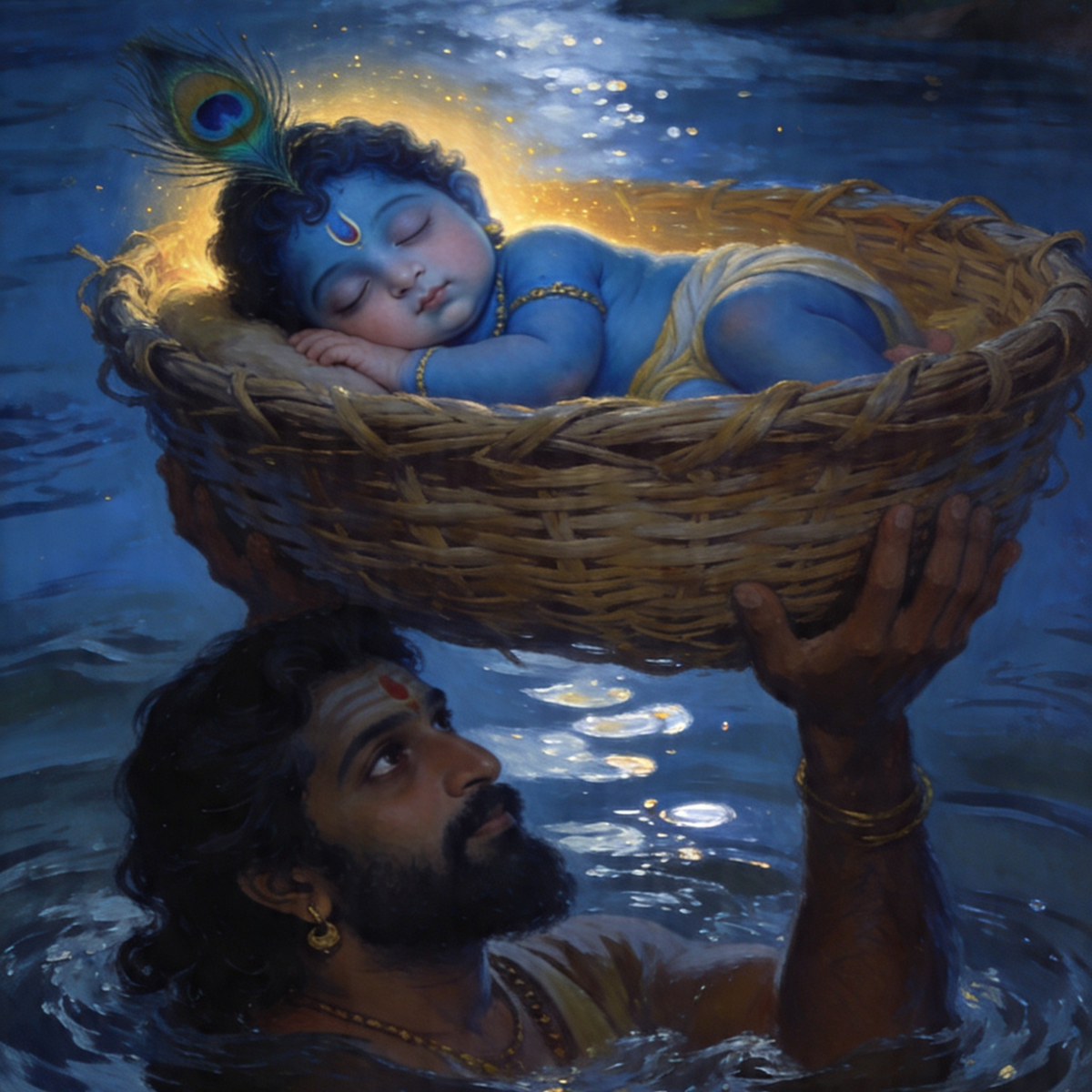
As Vasudeva stepped out of the prison gates, he was met by the full fury of the monsoon night. The sky was no longer just raining; it was as if the heavens had opened a thousand floodgates. The wind whipped across the plains of Mathura, howling like a wounded beast, and the flashes of lightning were so frequent that the world flickered between blinding white and absolute ink.
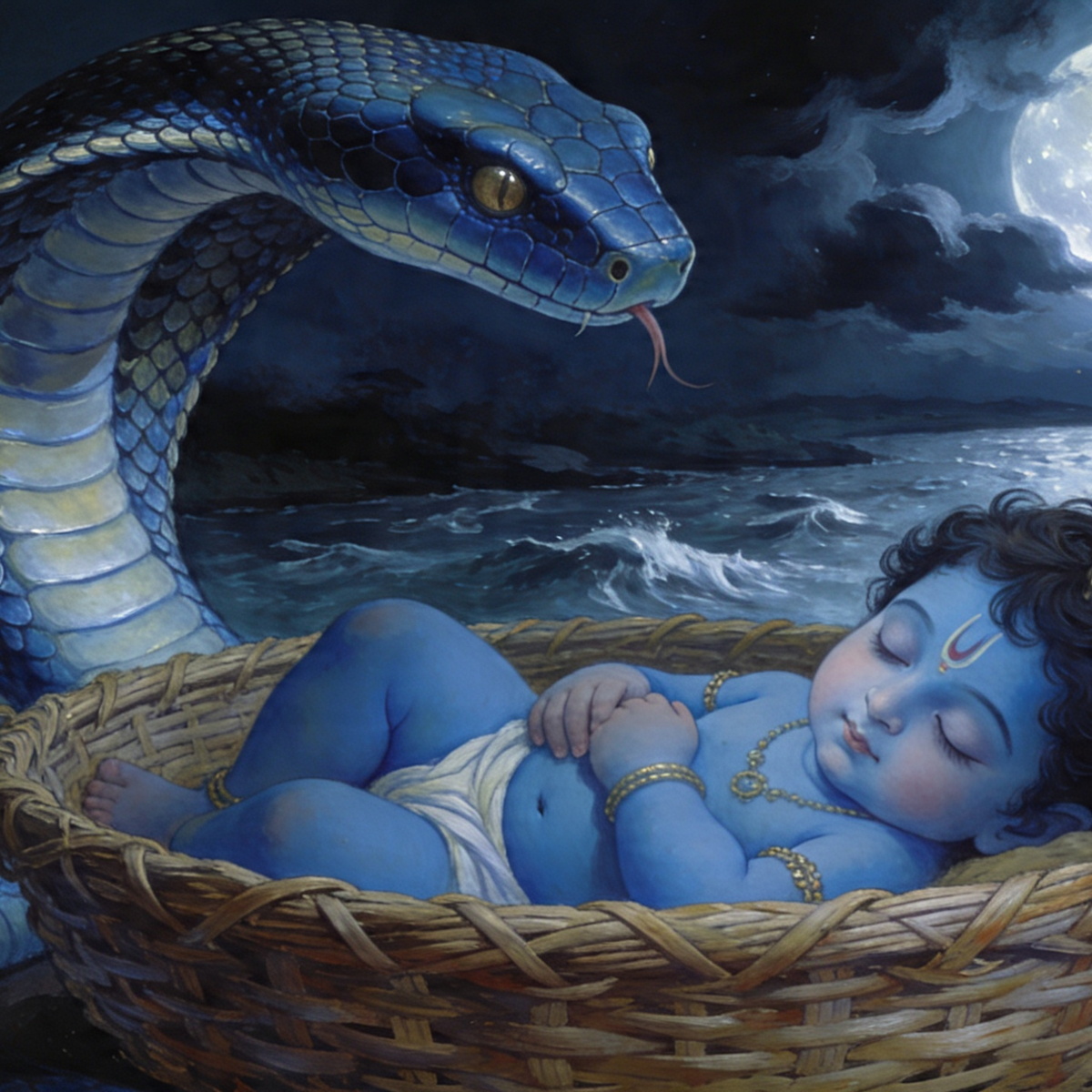
In his arms, Vasudeva held a simple wicker basket. Inside, shielded only by a thin cloth, lay the hope of the world. He pressed the basket against his chest, shielding the infant from the stinging rain with his own body. He knew he had to reach the banks of the Yamuna River, for on the other side lay the safety of Gokul.
When he finally reached the riverbank, his heart sank. The Yamuna was usually a peaceful, winding ribbon of blue water, but tonight she was transformed. The river was in full flood, swollen by the torrential rains into a churning, muddy monster. The waves crashed against the shore with a sound like thunder, and the current was so strong that it uprooted ancient trees, tossing them like toothpicks in the foam.
Vasudeva stood at the water’s edge, the mud pulling at his feet. To any ordinary man, crossing this river would be certain death. He looked at the swirling vortexes and the deep, dark depths. Then, he looked down at the child. The baby Krishna was looking back at him, his eyes calm and unafraid, reflecting the lightning that danced above.
With a prayer on his lips, Vasudeva stepped into the freezing water.
The moment his foot touched the river, a second miracle occurred. The Yamuna, recognizing the Divine child in the basket, felt a surge of devotion. The water did not pull him down; instead, it began to part. The roaring waves rose up on either side like two massive walls of glass, creating a narrow, dry path through the very heart of the river. The fierce current slowed to a gentle ripple near Vasudeva’s feet, as if the river herself was bowing down to let them pass.
But the storm above was still raging. Huge droplets of rain threatened to drown the tiny infant in the basket. It was then that the most magnificent protector appeared. From the depths of the earth, the Great Serpent, Sheshnag, rose up behind Vasudeva.
Sheshnag was a creature of legend, with a thousand shimmering heads and eyes that glowed like embers. He did not come to frighten, but to serve. He unfurled his massive, golden-scaled body and arched his many heads over the wicker basket like a grand, living umbrella. The rain pounded against the serpent’s scales, but not a single drop touched the child.
Vasudeva walked forward, his breath catching in his throat. On his left and right were walls of water held back by an invisible hand. Above him was the protective canopy of the King of Serpents. Beneath his feet was the sandy floor of the river, revealed for the first time in centuries.
The journey across the river felt like an eternity, yet it passed in a heartbeat. With every step, the lights of Mathura grew dimmer and the distant, dark silhouette of the Gokul forest grew closer. The Yamuna whispered a soft song against the shore as Vasudeva finally stepped onto the far bank.
As soon as his heels touched the grass of Gokul, the river roared back together, and Sheshnag silently submerged back into the depths, his task complete. Vasudeva stood on the new shore, drenched and exhausted, but safe. The barrier of the water had been crossed, the protector had done his duty, and the child of light had finally reached the land of the cowherds.
CHAPTER 12: A SAFE ARRIVAL
The air on the Gokul side of the Yamuna was different. While Mathura felt like a city of stone and iron, Gokul felt like a living, breathing forest. As Vasudeva climbed the riverbank, the fierce, howling winds of the storm began to soften into a rhythmic, cooling breeze. The grass beneath his bare feet was thick and lush, smelling of damp earth and sweet jasmine.
Vasudeva moved through the shadows of the sleeping village like a ghost. He knew the way to the house of his dear friend, Nanda. In Gokul, there were no towering stone walls or armed guards watching from balconies. The homes were made of sturdy wood and mud, topped with thatched roofs that blended into the landscape. Here, the only sounds were the occasional lowing of a cow in its shed or the rustle of leaves in the ancient trees.
As he reached the courtyard of Nanda’s house, he found the gates wide open. Just as it had been in the prison, a divine, mystical sleep had settled over this household as well. The heavy wooden doors to the main sleeping quarters swung open at his touch, silent and welcoming.
The interior of the house was warm and smelled of fresh milk, sandalwood, and incense. In the dim light of a flickering oil lamp, Vasudeva saw Yashoda, the queen of the cowherds, lying in a deep, peaceful slumber. Beside her lay a newborn baby girl—the daughter born to her just moments ago, also deep in the “Magic Sleep.”
With trembling hands and a heart heavy with both sadness and relief, Vasudeva performed the exchange that had been orchestrated by the heavens. He gently placed the dark-complexioned baby Krishna on the soft bed beside Yashoda. As he did so, he felt a momentary pang of grief; he was the father, yet he had to leave his son in the arms of another. But as he looked at the peaceful face of the infant, he knew that this was the only way to ensure the child’s safety and the world’s future.
He then carefully lifted the newborn baby girl into the wicker basket. She was the divine energy of the universe, sent to help complete the plan. Vasudeva took one last look at his son, seeing the golden glow of the Divine even in the shadows of the room, and then turned away.
The journey back across the river was shorter, for his heart was now filled with a strange, quiet resolve. The Yamuna parted once more, and the great serpent Sheshnag provided his canopy until the very last step. By the time Vasudeva re-entered the prison of Mathura, the doors closed behind him as if they had never been opened. He placed the baby girl beside Devaki, and as the heavy iron chains magically refastened themselves around his wrists, the “Magic Sleep” began to lift.
Vasudeva sat back against the cold stone wall, the weight of the metal returning to his limbs. He was back in his cell, but he was no longer a prisoner of despair. He had crossed the impossible river and reached the sanctuary of Gokul. The Savior was safe, tucked away in a house of love and butter, while the tyrant Kansa slept on, unaware that the world had changed forever while he dreamed.
CHAPTER 13: THE MORNING SURPRISE
As the first golden fingers of the sun began to stretch across the horizon, the village of Gokul woke up to a morning that felt different from any other. The storm of the previous night had vanished, leaving behind an air that was crisp, clean, and scented with the fragrance of blooming lotuses and wet earth. The birds did not just chirp; they seemed to be singing a symphony of celebration from the rooftops and the branches of the ancient banyan trees.
Inside the home of Nanda and Yashoda, the “Magic Sleep” finally lifted. Yashoda stirred in her bed, her heart feeling lighter than a feather. As she opened her eyes and looked down at the space beside her, she let out a soft gasp of pure, unadulterated joy. There, wrapped in soft linen, was a baby boy with skin the beautiful color of a dark cloud and a smile that seemed to contain the radiance of a thousand suns.
She did not know of the exchange. She did not know of the stormy river or the prison chains. To her, this was the answer to years of quiet prayers and secret longings. She gathered the infant into her arms, and the moment his tiny hand brushed against her, she felt a wave of love so powerful it moved her to tears.
The news spread through the house like a sunbeam. Nanda entered the room, and seeing the child, his face broke into a grin so wide it seemed to erase every wrinkle of age and worry. He stepped out onto his veranda and called out to the village, his voice booming with pride and happiness: “A son! A son is born to the house of Nanda!”
The village of Gokul, which had always been a close-knit community, erupted into a festival of joy. The cowherds—the Gopis and Gopas—dropped their milk pails and abandoned their chores. They didn’t care about the mud from the previous night’s rain; they began to dance in the streets.
Women dressed in their finest silk saris of bright yellow, vibrant pink, and deep emerald green. They carried silver plates filled with sweets, sandalwood paste, and fresh flowers. They swarmed toward Nanda’s house, their silver anklets tinkling like a thousand tiny bells. The atmosphere was electric with the sound of laughter and the rhythmic beating of drums.
The celebration was not just among the people; even the animals seemed to join in. The cows, usually calm and slow, began to low musically and nuzzle one another. The peacocks in the nearby forest unfurled their magnificent feathers and began to dance in the morning light.
Inside the courtyard, the celebrations took a traditional turn. The villagers began the custom of “Nandotsav.” They threw mixture of curd, turmeric, and saffron water at one another, turning the dust of the village into a golden, fragrant playground. They sang traditional songs that praised the new arrival, their voices rising in a harmony that could be heard for miles.
Nanda, in his immense gratitude, opened his storerooms. He gave away thousands of cows, mountains of grain, and clothes to the poor and the needy. It was a day where no one was a stranger and everyone was a part of the family. The “Morning Surprise” had turned a simple village into a paradise on earth.
As Yashoda sat on her porch, holding the baby Krishna while the village danced around them, she looked down into his sparkling eyes. She saw a universe of peace reflected there. Gokul had been waiting for this light, and now that it had arrived, the village knew that their lives would never be the same again. The shadows of the past were gone, replaced by the eternal sunshine of the child’s presence.
CHAPTER 14: LITTLE KRISHNA’S FIRST DAYS
In the days following the great celebration of his birth, the house of Nanda and Yashoda became a place of divine enchantment. The simple cowherd’s cottage was no longer just a home; it had become the center of the universe. The very air inside the rooms seemed to carry a sweet, celestial fragrance, and a soft, golden light seemed to linger in the corners, even after the sun had set.
Little Krishna, though he was the supreme power of the cosmos, chose to play the role of a helpless infant with perfect grace. To Yashoda, he was her “Lalla”—her precious little boy. She spent her days draped in a state of constant wonder. She would sit for hours by his wooden cradle, which was carved from the finest sandalwood and lined with the softest silks Gokul could provide. As she rocked him gently, the rhythmic creak of the cradle became the heartbeat of the home.
The beauty of the infant Krishna was unlike anything the villagers had ever seen. His skin was the color of a monsoon cloud just before it releases its rain—a deep, shimmering blue-black that seemed to absorb and radiate light at the same time. His eyes were wide and shaped like the petals of a lotus, fringed with long, dark lashes that cast tiny shadows on his cheeks. When he looked at Yashoda, it felt as though he was looking through her soul, filling every corner of her heart with a peace she had never known.
Even in these first few days, stories of his “charm” began to fill the village. It was said that if the baby smiled, the cows in the yard would stop grazing and lift their heads, their eyes filling with tears of joy. If he gave a soft cry, the clouds would gather to provide shade over the house. The Gopis—the village women—found themselves unable to complete their daily chores. They would find any excuse to visit Yashoda’s kitchen, just to catch a glimpse of the sleeping child. They brought gifts of fresh butter, handmade toys, and protective charms, but in reality, they came to be near the light he emitted.
Yashoda delighted in the simple rituals of motherhood. She would apply a small dot of black kajal to his cheek to ward off the “evil eye,” unaware that he was the protector of the entire world. She would dress him in tiny yellow silks that contrasted beautifully with his dark skin, and adorn his ankles with silver bells. When he moved his tiny feet, the “tinkle-tinkle” of the bells echoed through the house, a sound that Nanda claimed was more musical than any flute or veena.
One of the most cherished stories of these early days was the “Universe in a Yawn.” It is said that one afternoon, as Yashoda was cradling him, the baby gave a long, sleepy yawn. For a split second, as his mouth opened wide, Yashoda did not see the pink tongue of an infant. Instead, she saw the swirling galaxies, the suns and moons, the vast oceans, and all the living beings of the world. Her breath caught in her throat, and she felt a moment of dizzying cosmic awe. But as soon as he closed his mouth and let out a tiny, innocent sigh, the vision vanished, and she was once again just a mother holding her child.
These first days were a time of “Leela”—divine play. Krishna was teaching the people of Gokul that the greatest power in the universe could be found in the simplest acts of love. The house was a sanctuary of laughter, the scent of warm milk, and the boundless affection of a mother. While the world outside might have been full of kings and conquests, inside the walls of Nanda’s home, the only thing that mattered was the steady, peaceful breathing of the child who had come to save the world, one smile at a time.
CHAPTER 15: FASTING AND FEASTING
The celebration of Janmashtami is not just a story told; it is a story lived through the ancient and vibrant traditions of “Vrat” and “Utsav”—the Fast and the Feast. For millions of devotees around the world, this day is a journey of the senses, a time when the physical body is disciplined through fasting so that the spirit can be nourished through devotion.
The day begins long before the sun rises. The atmosphere in a household on Janmashtami is one of frantic yet joyful preparation. The morning air is thick with the scent of incense and the sound of bells, as the family cleans the home to welcome the Lord. But the most significant tradition of the morning is the “Vrat,” or the holy fast.
The tradition of fasting is a beautiful expression of love. Devotees choose to go without food or water for the entire day, matching their rhythm to the story of the prison. Just as Devaki and Vasudeva waited in the darkness of the cell for the birth of the Lord, the devotee waits through the day, keeping their mind focused on the divine. Some follow a “Nirjala” fast, consuming not even a drop of water, while others partake only in “Phallar”—a diet of fresh fruits, milk, and nuts. This physical sacrifice is believed to purify the heart, making it a fit “cradle” for the Lord to be born into at midnight.
As the day progresses and the hunger grows, the focus shifts to the kitchen, where the “Feast” is being prepared. Even though the adults are fasting, the kitchen becomes a place of incredible magic. Because Krishna is famously known as “Makhan Chor” (the butter thief), the food prepared on this day is centered around milk, cream, and butter.
The air begins to fill with a symphony of aromas. There is the sweet, nutty scent of “Panjiri”—a traditional offering made of coriander seed powder, ghee, and sugar, which is said to be very healthy for a new mother like Yashoda. Then there is the rich, creamy fragrance of “Kheer,” a slow-cooked rice pudding infused with saffron and cardamom. In many homes, “Chappan Bhog” is prepared—a magnificent offering of fifty-six different types of food, ranging from savory snacks to the most delicate sweets.
Each item in the feast is prepared with “Bhava,” or deep emotion. The cooks do not taste the food as they prepare it; it is made purely for the Divine. You might see stacks of “Pooris,” bowls of “Sabudana Khichdi,” and various types of “Laddoos” made from coconut, sesame, and besan.
The contrast between the “Fasting” and the “Feasting” creates a beautiful spiritual tension. The fasting represents the longing and the struggle of the world before Krishna’s birth, while the feast represents the abundance and joy that his arrival brings.
When the clock finally strikes midnight, the fast is broken. This moment is known as “Parana.” After the midnight prayers are complete and the baby Krishna has been symbolically bathed and fed, the family sits together. The first bite of the blessed food, or “Prasad,” is said to taste better than any gourmet meal in the world. It is a moment of communal celebration, where the discipline of the day turns into the ecstasy of the night. Through these traditions of fasting and feasting, the ancient story of Gokul is brought into the modern home, turning a simple meal into a sacred connection with the Divine.
CHAPTER 16: DAHI HANDI
If the midnight birth is the soul of Janmashtami, then “Dahi Handi” is its vibrant, beating heart. This tradition, which takes place on the day following the birth, transforms the streets into a theater of courage, teamwork, and sheer exhilaration. It is a physical reenactment of the “Leela” or divine play of the young Krishna, who was famously known as the “Makhan Chor”—the butter thief.
The legend tells us that as a child, Krishna’s love for fresh butter, curd, and milk was so great that no shelf was high enough to keep it from him. The village women of Gokul would hang their pots of freshly churned butter from the high rafters of their ceilings, thinking the height would protect their treasures. But the clever Krishna would gather his friends, and together they would form a human ladder to reach the prize. The Dahi Handi festival brings this ancient story into the modern world with breathtaking scale.
The scene of a Dahi Handi celebration is a riot of color and sound. Long before the first pyramid is formed, the “Handi”—an earthen pot filled with a mixture of curd, milk, honey, and fruits—is suspended high above the ground. It is often hung between two buildings or from a massive crane, draped in flower garlands and colorful streamers. The height is daunting, often reaching several stories into the air, challenging the gravity-defying skills of the participants.
The participants, known as “Govindas,” arrive in large groups, often wearing matching t-shirts that represent their neighborhood or group. The air is thick with the rhythmic pounding of drums and the chanting of “Govinda Ala Re!”—a cry that translates to “Govinda has come!” This chant serves as a pulse, driving the energy of the crowd to a fever pitch.
The formation of the pyramid is a masterclass in coordination and trust. It begins with a wide, sturdy base of the strongest men, who lock arms and plant their feet firmly on the ground. Upon their shoulders, a second layer of Govindas climbs, followed by a third, and a fourth. As the pyramid rises higher into the sky, the participants become leaner and lighter. The spectators on the balconies above often splash water down on the pyramid, making the task even more difficult and the skin more slippery.
The tension in the crowd is palpable. Every wobble of the pyramid brings a collective gasp; every steadying hand brings a cheer. It is a moment where individual egos disappear, replaced by a singular, collective goal. The person at the very top—often the youngest and lightest boy—must climb with the agility of a monkey and the balance of a tightrope walker.
When the “summit” is finally reached, the boy at the top breaks the earthen pot with a small wooden stick or his own head. The contents—the “Prasad”—shower down on the Govindas below, symbolizing the outpouring of divine grace. The breaking of the pot is met with a roar of triumph that shakes the very buildings.
But Dahi Handi is about more than just breaking a pot. It is a powerful metaphor for life. It teaches that no goal is too high if we work together. It represents the breaking of the “ego” (the clay pot) to release the “divine sweetness” (the curd) within. Through the sweat, the falls, and the eventual victory, the tradition reminds us that the Lord is most pleased when his devotees come together in a spirit of unity and joy. As the water and curd mix with the dust of the streets, the division between the divine and the human seems to vanish, leaving only the laughter of the people and the ancient spirit of Gokul alive in the modern city.
CHAPTER 17: JHULAN AND BHAJANS
While the streets of the city are filled with the thunderous energy of the Dahi Handi, a much more intimate and soulful tradition takes place within the homes and temples. This is the tradition of “Jhulan” and “Bhajans”—the swinging of the cradle and the singing of devotional songs. If Dahi Handi represents Krishna’s adventurous spirit, then Jhulan represents the deep, tender love of a mother and the quiet devotion of a seeker.
The “Jhulan,” or the cradle ceremony, is a sight of breathtaking beauty. In many households, a small, ornate cradle is prepared specifically for this night. It is not just a piece of furniture; it is a work of art. The cradle is often made of polished silver, carved wood, or even gold, and it is draped in garlands of fresh, fragrant jasmine, marigolds, and roses. The scent of the flowers, combined with the wafting smoke of sandalwood incense, creates a space that feels like a garden in heaven.
A small idol of the “Bal Krishna” (the infant Krishna) is placed inside the cradle, resting on cushions of velvet and silk. Devotees take turns gently pulling a silken rope to swing the cradle back and forth. This rhythmic, swaying motion is symbolic; it represents the rocking of the heart and the soothing of the mind. As the cradle moves, the silver bells attached to it let out a soft, crystalline “tinkle,” a sound that is said to clear the air of all negative energy.
Accompanying the gentle motion of the cradle are the “Bhajans”—the traditional songs of praise. Music has always been the language of devotion in the story of Krishna, and on this night, the music never stops. These are not just songs; they are emotional outpourings that have been passed down through generations.
The instruments used are as ancient as the stories themselves. You will hear the rhythmic thrum of the “Mridangam” or “Dholak” drums, the metallic clashing of the “Manjira” (cymbals), and the soulful, harmonizing drone of the “Harmonium.” But the most important instrument is the “Bansuri,” or the flute. Since Krishna himself was a master of the flute, the high, piercing, yet sweet notes of this instrument are believed to call out to the soul, inviting it to dance in the joy of the Divine.
The lyrics of these Bhajans often tell the stories we have explored in this book. Some songs describe the beauty of the dark-skinned child, others sing of Yashoda’s motherly love, and many recount the miracles performed in the forest of Gokul. The singing often begins slowly and softly, like a whisper in the wind, but as the night progresses, the tempo increases. The voices of the young and the old join together, rising in a crescendo of “Hari Bol” and “Radhe Radhe.”
In this atmosphere, time seems to stand still. The act of swinging the cradle is a meditative practice; it allows the devotee to focus entirely on the presence of the Lord. For those few hours, the worries of the modern world—the bills, the jobs, the stresses of daily life—all fade into the background. There is only the motion of the swing, the scent of the jasmine, and the melody of the song.
Through Jhulan and Bhajans, the story of Janmashtami moves from the mind to the heart. It becomes a personal experience of peace and connection. As the cradle sways, it reminds everyone that the Lord is not a distant figure in history, but a living presence that can be rocked in the cradle of one’s own devotion. It is the perfect, quiet conclusion to a celebration of such immense scale and significance.
CHAPTER 18: JANMASHTAMI AROUND THE WORLD
The story of Krishna’s birth may have begun in a small prison cell in Mathura, but today, its echoes are felt in every corner of the globe. Janmashtami has transcended the borders of India to become a truly international phenomenon. From the high-tech streets of Singapore to the historic squares of London and the sun-drenched beaches of the Caribbean, the “Midnight Miracle” is celebrated with a diversity of traditions that show the universal appeal of the Lord’s message.
In London, the celebrations at Bhaktivedanta Manor are legendary. Thousands of people from all walks of life trek to the countryside to witness one of the largest Janmashtami gatherings outside of India. The English air, often cool and misty, is transformed by the heat of massive outdoor kitchens and the vibrant colors of traditional Indian dress. Here, the festival is a bridge between cultures, where ancient Vedic traditions are presented with a modern, global flair. The sight of a traditional Indian festival set against the backdrop of the British countryside is a powerful reminder that devotion knows no geography.
Across the ocean in the United States, Janmashtami is a time for community and education. In cities like New York, Los Angeles, and Houston, large temples become hubs of cultural activity. Children born and raised far from the banks of the Yamuna River dress up as little Krishna and Radha, participating in plays and dance dramas that keep their heritage alive. For these communities, the festival is a way to stay connected to their roots while sharing the joy of the story with their neighbors. The “Dahi Handi” pyramids often rise against the backdrop of American skyscrapers, a beautiful fusion of the ancient and the modern.
In the tiny island nation of Mauritius, Janmashtami is a deeply spiritual national event. With a large population of devotees, the island turns into a sanctuary of song. Pilgrims often walk long distances to reach temples, singing bhajans as the tropical breeze carries the scent of the ocean. Similarly, in Fiji and Guyana, the traditions brought by ancestors generations ago are preserved with fierce love and precision. The songs sung in these distant lands carry a unique melodic flavor, influenced by the local cultures but always centered on the same divine child.
In Nepal, the festival is known as “Krishnashtami.” The famous Krishna Temple in Patan Durbar Square becomes a sea of devotees. People sit in vigil all through the night, chanting the names of the Lord and waiting for the midnight hour. The architecture of the ancient Newari temples provides a majestic, timeless setting for the celebrations, making one feel as if they have stepped back centuries into the past.
Even in countries where the devotee population is small, such as parts of Europe or Japan, Janmashtami is marked by quiet, beautiful gatherings. In small apartments and rented halls, the scent of incense and the sound of the flute create a “Mini-Gokul.” These celebrations prove that the spirit of Krishna—centered on love, joy, and the victory of light over darkness—is a language that everyone can understand.
As the sun sets on Janmashtami and the midnight hour travels around the earth, timezone by timezone, a continuous wave of prayer and celebration encircles the globe. Whether it is celebrated with a massive parade in Mumbai or a single lamp in a window in New Zealand, the essence remains the same. Janmashtami around the world is a testament to the fact that the “Midnight Miracle” was not just an event for one city or one time. It was a gift to all of humanity, a reminder that wherever there is devotion, wherever there is a longing for justice, and wherever there is a heart full of love, the Lord is born again and again.
ACKNOWLEDGMENTS
Creating this book has been a journey of heart and spirit, and it would not have been possible without the support and dedication of many individuals.
First and foremost, I wish to express my deepest gratitude to the scholars and storytellers who have kept the flame of these ancient traditions alive for generations. Their commitment to preserving the rich history of Krishna Janmashtami provided the foundation for every word in these pages.
A special thanks goes to the creative team at MiMi Flix. Your passion for bringing spiritual stories to life in a way that resonates with modern readers has been the driving force behind this project. Thank you for your tireless hours of research, writing, and design.
To my family and friends, thank you for your patience and encouragement during the long nights of writing. Your belief in the importance of sharing these lessons of hope and courage kept me inspired.
Finally, thank you to you, the reader. By opening this book, you have allowed the “Midnight Miracle” to live on in another heart. It is my hope that these stories bring as much light into your life as they have brought into mine.
— MiMi Flix
ABOUT THE AUTHOR
MiMi Flix is a digital sanctuary dedicated to the art of storytelling. More than just a website, it is a creative collective fueled by a shared passion for bringing ancient wisdom, cultural traditions, and timeless legends into the modern light.
The team behind MiMi Flix believes that stories are the threads that connect us across generations and borders. By blending meticulous historical research with engaging, contemporary narratives, MiMi Flix strives to make spiritual and cultural heritage accessible to everyone—from young children hearing these tales for the first time to lifelong devotees seeking a fresh perspective.
Through projects like The Midnight Miracle, MiMi Flix continues its mission to inspire hope, celebrate diversity, and remind readers that even in the darkest of times, light and joy are always just a heartbeat away.
Explore more stories and discover the magic of tradition at www.mimiflix.com.
GLOSSARY
To help you better understand the beautiful traditions and stories shared in this book, here are simple definitions for some of the key terms used:
- Avatar: A divine being who takes a physical form on Earth. In this story, Lord Krishna is an avatar of the Divine, appearing to restore peace and goodness to the world.
- Bhajan: A devotional song or hymn. These are sung with love and rhythm to express praise and gratitude to the Lord.
- Dahi Handi: A festive event where people form human pyramids to break an earthen pot filled with curd, celebrating Krishna’s playful childhood.
- Dharma: The path of righteousness, duty, and truth. Krishna’s life is a guide on how to follow one’s dharma even in difficult times.
- Gokul: The peaceful village where Krishna was raised by his foster parents, Nanda and Yashoda.
- Janmashtami: The festival celebrating the birth (Janma) of Lord Krishna on the eighth day (Ashtami) of the dark fortnight.
- Leela: Divine “play” or pastimes. This refers to the miraculous and often mischievous activities of Krishna during his time on Earth.
- Mathura: The ancient city and kingdom ruled by the tyrant Kansa, and the birthplace of Lord Krishna.
- Prasad: Food or offerings that have been blessed during a prayer ceremony. It is shared among everyone as a gift of divine grace.
- Sheshnag: The king of all serpents with many heads, who serves as a protector and resting place for the Divine.
- Vrat: A religious fast or vow. During Janmashtami, many people observe a vrat to purify their minds and focus on their devotion.
- Yamuna: One of India’s most sacred rivers, which famously parted to allow Vasudeva to carry the baby Krishna to safety.
KEY TAKEAWAYS
The story of Krishna’s birth is not just an ancient tale; it is a roadmap for how we can face the challenges in our own lives today.
- Bravery in the Face of Fear Vasudeva and Devaki showed us that true courage isn’t the absence of fear, but the ability to keep going despite it. Even when locked in a dark dungeon, they held onto their integrity and their word. This teaches us that even when we feel trapped by our circumstances, our spirit can remain free.
- The Power of Love From the protective hoods of Sheshnag to the warm welcome of the villagers in Gokul, love is the force that moves the story forward. It reminds us that love is a protective shield and that when we act out of care for others—rather than for ourselves—miracles often happen.
- Hope is Never Lost The prophecy was a light at the end of a very long, dark tunnel. For years, it seemed like Kansa was winning, but the “Midnight Miracle” proves that darkness is often at its thickest right before the dawn. It encourages us to keep the faith, even when the “storm” in our lives feels overwhelming.
- Unity and Support Through the tradition of Dahi Handi, we learn that we are stronger together. Krishna didn’t reach the butter alone; he relied on his friends. In the same way, our greatest achievements usually come from supporting one another and building “human pyramids” of kindness and cooperation.
- The Divine in the Ordinary The fact that the Lord chose to grow up in a simple village of cowherds teaches us that greatness isn’t found in gold and palaces, but in the simple, everyday moments of life—like the sharing of butter or the singing of a song.